A business direction
A planning product for the weekly growth meeting
A growth-planning product with a clear category address from its first release.
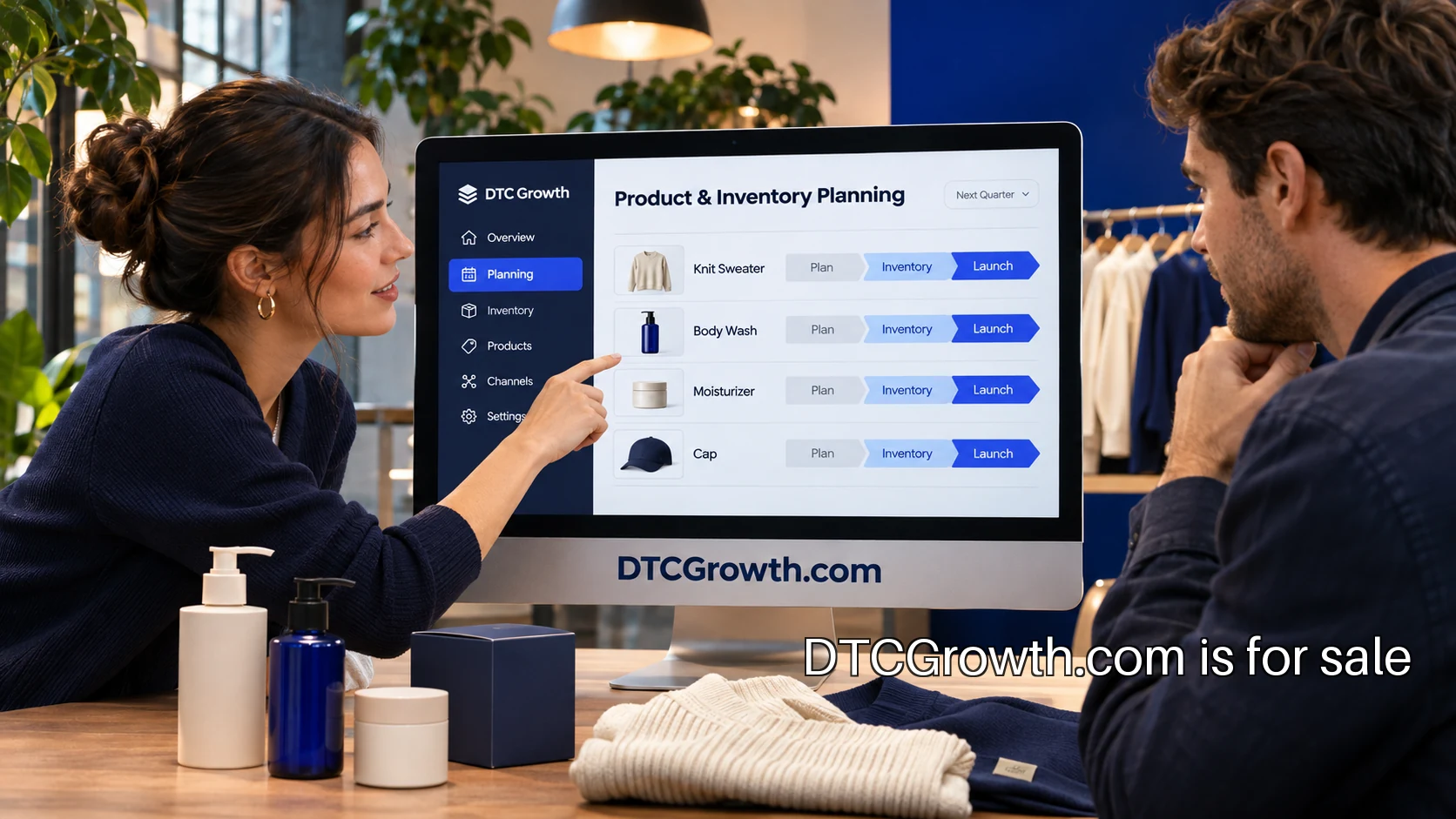
A planning product on DTCGrowth.com could help a consumer-brand team turn a crowded list of ideas into a weekly plan it can actually carry out. Acquisition, retention, creative production, inventory and customer support all affect the commercial calendar. A small team often needs a shared view of those dependencies more than it needs another dashboard of results.
The first product could focus on the meeting where the next week's work is chosen. It would collect proposed initiatives, connect each one to a question and make ownership visible. The founder's opportunity would be to understand that routine closely enough to remove its repeated friction. A useful first release might be much narrower than a complete operating system.
Observe the current planning routine
Before building screens, a founder could sit with a few design partners and follow how a plan is assembled. Where do ideas arrive? Who decides which ones move forward? How does someone discover that a campaign depends on photography that has not been scheduled? What happens when inventory changes after the plan has been agreed? The answers reveal the product's first job.
The initial research should preserve the language the team uses. One business may organize around launches, another around channel experiments and another around product categories. A founder can choose a first audience with a sufficiently similar routine to support a focused product. Trying to satisfy every planning style at once would make the first experience harder to explain and harder to learn from.
A simple prototype could be a shared view of the upcoming meeting. Each proposed initiative has an owner, a target customer group, a reason for doing the work, a required decision and a small list of dependencies. The product would make missing pieces visible before the meeting starts, giving the team more time to discuss choices.
Connect the plan to a question
A task title such as “new email sequence” says little about why the work exists. The product could ask for the customer problem or commercial question behind it. Is the team trying to help first-time buyers use the product, introduce an accessory, or understand a drop in repeat purchasing? Recording that question creates a better basis for deciding what to measure later.
The official ecommerce measurement guide shows that events such as purchases and refunds need deliberate implementation. A planning tool does not have to become the analytics system, but it can make the measurement dependency explicit. If an initiative needs a new event or a corrected definition, that work belongs in the plan before launch.
The first version might allow a team to attach a link to its existing report and write a short definition beside it. That is enough to preserve what the team meant by success. A later integration should solve an observed problem, such as repeated copying or inconsistent date ranges, rather than add an impressive-looking connection that nobody uses.
Make capacity part of the choice
Small teams often have more worthwhile ideas than they can execute in a week. The product could make that constraint easier to discuss by showing the people and assets required for each initiative. A designer shared across several projects is a real dependency. So is a product sample needed for a shoot, a support article needed before a launch or an approval that has no clear owner.
A practical interface might let the team move an initiative from proposed to ready only when a few required fields are complete. That does not need to feel bureaucratic. The fields should reflect the minimum information a colleague needs to begin work. The founder can learn which requirements help through observation of actual meetings and remove those that merely create typing.
The weekly review would then connect the plan with what happened. Was the work delivered? Did the original question get answered? What changed in the assumptions? A concise decision log can preserve that history without asking the team to write a report for every task.
Keep the first release small enough to adopt
A founder could begin with a single team view, a reusable initiative brief and a meeting summary. Design partners would use it alongside their existing task manager and analytics tools. The product's success in that stage would be whether it becomes part of the weekly routine and helps the team make a clearer decision, not the number of features it can display.
DTCGrowth.com gives that product a direct category identity. It can begin as a planning tool for one type of consumer brand and expand only as the founder learns which adjacent problems belong together. The name would remain the same across the first prototype, a paid product and a larger suite if that is where the work leads.
The best early invitation would be concrete: bring one upcoming growth meeting and use the product to prepare it. A founder acquiring this name could organize their research, product demonstration and first customer conversations around that shared task. The business would start with a routine people already have and a clearer way to carry it out.
A clear identity for your DTC growth business
Discuss acquiring DTCGrowth.com for the business you have in mind.